ComparisonNo affiliate links

Low Spoke Count vs High Spoke Count Wheels

Spoke count on this site's own archived reviews ranges from 16 on the deepest aero wheel to well over 40 combined front and rear on entry-level alloy wheels, and that range isn't accidental. Fewer spokes generally means less weight and less aerodynamic drag; more spokes generally means more durability and a more forgiving build for a given rim and hub quality.

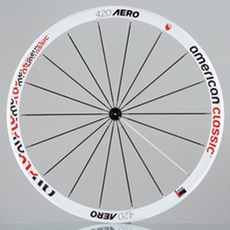
American Classic 420 wheelset, a moderate spoke count road wheel, archived manufacturer product photo

The American Classic 420, an alloy wheelset representative of the moderate spoke counts common between the low-count aero extreme and high-count durability builds (archived manufacturer photo).

Quick definitions: Spoke count refers to the total number of spokes in a wheel, usually described separately for front and rear since the rear typically carries more (and needs more durability, given drivetrain torque). Lower counts, 16-24, favor weight and aero. Higher counts, 28-36, favor strength and load distribution.

What actually differs

FactorLow count (16-20)High count (24-36)
Archived exampleBontrager Aeolus 9.0: 16 spokes, wide-spacing patternEaston EA70: 24 front / 28 rear, 52 total
Load per spokeHigher, each spoke does more workLower, load spread across more spokes
AerodynamicsBetter, fewer spokes means less turbulenceWorse, though modern bladed spokes reduce the penalty
Manufacturing cost and engineering demandHigher, needs a stiffer rim and precise build to compensate for fewer spokesLower, a more forgiving, traditional build
Recommended rider weight range, general guidanceLighter riders, or wheels specifically engineered without a weight limit like the Aeolus 9.0Heavier riders, loaded touring, or rough-road use

Why 16 spokes can work without a weight limit, and when it can't

The archive review of the Bontrager Aeolus 9.0 specifically claims no rider weight limit at 16 spokes, made possible by an unusually strong OCLV carbon rim taking on load-bearing work a spoke would otherwise handle. That's the exception, not the rule: a generic 16-20 spoke wheel without that kind of rim engineering behind it is a much riskier choice for a heavier rider or rough roads than a purpose-built low-count aero wheel from a major manufacturer.

Why higher counts remain the safer default recommendation

For most riders, especially anyone heavier than average or riding on inconsistent road surfaces, a 24-32 spoke wheel like the Easton EA70's 24-front/28-rear build remains the more forgiving, lower-risk choice. See our wheels for heavier riders guidance for how spoke count fits into that broader picture alongside rim depth and hub quality.

Low spoke count fits you ifyou're a lighter rider prioritizing aero performance and weight, and you're buying from a manufacturer that engineers the rim specifically to compensate, not a generic budget low-count wheel.
High spoke count fits you ifyou're a heavier rider, you ride rough or inconsistent road surfaces, or you'd rather have a wheel that tolerates an occasional missed pothole without truing than shave the last bit of weight.
Frequently asked questions

Is a 16-spoke wheel automatically less durable than a 32-spoke wheel?
Not automatically, it depends heavily on the rim's engineering. A purpose-built low-count aero wheel from a major manufacturer, like the archived Aeolus 9.0, is engineered to compensate. A generic low-count wheel without that engineering behind it is a genuinely riskier choice.
Does spoke count affect how often a wheel needs truing?
Generally yes; higher spoke counts distribute load and small road impacts across more points, which tends to keep a wheel true longer under the same riding conditions than a lower-count wheel carrying more load per spoke.