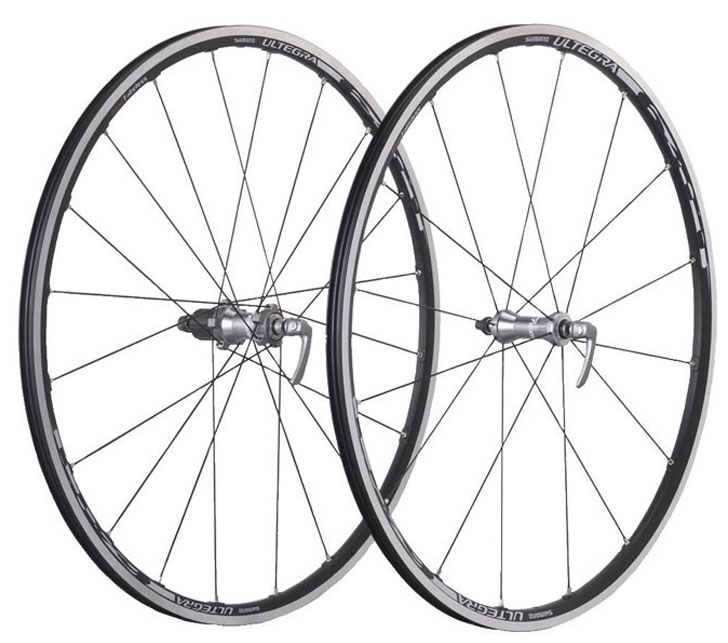
Quick definitions: Quick release uses a thin skewer, about 5mm in diameter, passing through a hollow axle roughly 9mm front and 10mm rear, clamped by a cam lever. Thru axle uses a thicker 12mm axle that threads directly into a closed dropout, with front axles now commonly 100mm long and rear axles 142mm.
What actually differs
Why disc brakes are the actual reason for the switch
The move to thru axles has less to do with rim brake wheels needing an upgrade and more to do with disc brakes needing precise, repeatable wheel positioning. A disc rotor has to sit within a tight tolerance of the caliper every single time the wheel goes back on, and a closed thru-axle dropout guarantees that in a way an open quick-release dropout doesn't as reliably. See our rim brake vs disc brake wheels comparison for the fuller picture of why that shift happened.
The safety difference that gets less attention
A quick release wheel, if not fully clamped, can in rare cases work loose from an open dropout while riding. A thru axle threads into a closed dropout, so even an under-tightened axle can't let the wheel physically separate from the frame the same way. It's a smaller practical concern for most careful riders than the disc-brake alignment issue, but it's a real, documented part of why the industry consolidated around the thru-axle design.
Quick release still works ifyou own an older rim-brake frame and aren't planning to change it, since a rim-brake wheel doesn't need thru-axle precision the way a disc wheel does.
Thru axle is what you'll get by default ifyou're buying any current disc-brake road bike, since it's effectively universal on 2026 disc frames and isn't really an optional upgrade at that point, it's the standard.