ComparisonNo affiliate links

Wide vs Narrow Internal Rim Width

Internal rim width, the measurement between the inner walls where the tire actually seats, has widened substantially since this site's 2010-2015 archive era, and it's one of the clearest examples of a road cycling standard that has genuinely moved, not just marketing repackaging the same product.

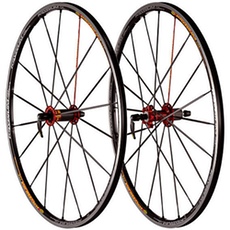
Mavic Ksyrium SL wheelset with narrower archive-era rim profile, archived manufacturer product photo

The Mavic Ksyrium SL, representative of the narrower internal rim widths common through the archive era, typically well under today's 21mm standard (archived manufacturer photo).

Quick definitions: Internal rim width is measured between the inner brake-track or bead walls, not the outer tire-to-tire measurement. A narrower internal width supports a narrower tire well; a wider internal width supports a wider tire with better support and a rounder profile at the same pressure.

What actually differs

FactorNarrow (archive-era, roughly 13-17mm)Wide (current standard, 21-25mm)
Typical supported tire widthRoughly 21-25mm21mm internal pairs with 25-30mm tires; 25mm internal pairs with 28-32mm or wider tires
Tire shape at a given pressureNarrower, more rounded but less supported sidewallWider, more squared-off profile with a larger contact patch
Brand examples at the current wide endNot applicable to the archive eraRoval, Vision, and Shimano use 21mm internal; Bontrager, Enve, and Zipp use 23mm; some hookless designs run 25mm
Why it changedNarrower tires (21-23mm) were the road standard through the archive eraWider tires (25-32mm) became the standard for comfort and lower rolling resistance without a speed penalty
Archive-era exampleThis site's reviewed wheels (Ksyrium, Ultegra, EA70) all predate the wide-rim shiftNone in the archive; this is entirely current-generation research

Why wider rims followed wider tires, not the other way around

Research through the 2010s showed that wider road tires, at a given pressure, roll no slower and often faster than narrow ones, while being more comfortable and pinch-flat resistant. As tires widened from the archive-era 21-23mm standard toward today's common 25-30mm, rims needed to widen too, a narrow rim under a wide tire creates a lightbulb-shaped cross-section that hurts both aerodynamics and tire stability.

What this means if you're pairing new tires with an older archive-era wheel

A narrow archive-era rim, built for 21-23mm tires, can usually still mount a 25mm tire safely, but going much wider than that risks a poor tire shape and reduced stability. This is one of the more concrete reasons an older wheelset, even one in good mechanical condition, can hold a rider back from current tire width recommendations.

A 21mm internal rim fits you ifyou're running 25-30mm tires, which covers the large majority of current road setups, and you want the current mainstream standard without chasing the widest available option.
A 25mm+ internal rim fits you ifyou're running 28-32mm or wider tires for comfort or light gravel-adjacent riding, where the extra internal width keeps the tire properly supported and shaped.
Frequently asked questions

Can I put a 23mm tire on a modern 21mm internal rim?
Technically yes, but it's not recommended. A tire that narrow on a rim that wide tends to balloon into a rounder, less stable shape than the tire was designed for, and most current tire and rim makers now recommend a minimum tire width for a given internal rim width.
Does a wider rim make the wheel heavier?
Slightly, since a wider rim uses more material, but the difference is usually small compared to the comfort and rolling-resistance gains most riders get from correctly pairing rim and tire width.