ComparisonNo affiliate links

Mavic vs Fulcrum Alloy Wheels

Mavic and Fulcrum have been the two default recommendations for a mid-to-premium alloy road wheelset for most of the last fifteen years, and they approach the category from different starting points. Mavic builds wheels as a matched proprietary system, spokes, rim, and hub sold only as a set. Fulcrum builds wheels that are closer to a standard open-spoke design a shop can true and rebuild with generic parts.

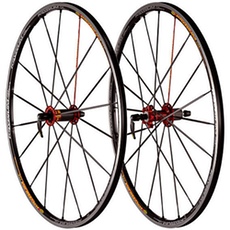
Mavic Ksyrium SL road wheelset, archived manufacturer product photo

The Mavic Ksyrium SL, Mavic's flagship alloy wheelset for most of the 2010s (archived manufacturer photo).

Quick definitions: Mavic's Ksyrium line uses proprietary aluminum or Zicral spokes and a closed rim system. Fulcrum's Racing line uses a conventional open-spoke build with the brand's own hub and bladed spokes, closer to a standard rebuildable wheel.

What actually differs

FactorMavicFulcrum
System typeProprietary, matched components sold as a setOpen-spoke build, closer to a standard rebuildable wheel
Example weight changeKsyrium SL cut 140g in its 2009 revision, plus 35g from updated skewersRacing Zero: 1430g tubular, 1435g clincher, 1460g tubeless-ready (2-way fit)
Example historical priceKsyrium SL/Elite tier pricing, not disclosed in the archive review$1660 for the Racing Zero, with a $20 replacement cost per spoke
Signature detailCarbon front hub body and Zicral alloy spokes distinguish the SL from the EliteRed anodized spokes as a visible brand signature across the Racing line
Tubeless support (era-specific)Not standard on the 2009-era Ksyrium SL reviewed in the archive2-way fit tubeless-ready option available on the Racing Zero as of the 2010 review

What the proprietary trade-off actually costs you

A closed system like Mavic's Ksyrium can be lighter and more finely tuned because the engineers control every variable, spoke shape, count, and rim profile together. The trade-off shows up years later: if a Mavic-specific spoke breaks somewhere a shop doesn't stock Mavic parts, the repair takes longer than a generic spoke swap. Fulcrum's more conventional build sacrifices a small amount of that fine-tuning for wider serviceability.

Why Fulcrum and Campagnolo wheels often get grouped together

Fulcrum was founded out of the same manufacturing group as Campagnolo and has historically shared factory resources and some hub technology with it. Riders comparing Fulcrum to Mavic are effectively comparing an Italian-heritage open-build wheel against a French-engineered closed system, a genuinely different design philosophy, not just two competing badges on similar hardware.

Lean Mavic ifyou want the lightest possible finished weight at a given price point and you're comfortable sourcing Mavic-specific spokes if one ever breaks.
Lean Fulcrum ifyou want a wheel any competent shop can true or rebuild with parts on the shelf, or the 2-way fit tubeless option matters more to you than shaving the last 30-50 grams.
Archive-sourced vs currentThe Fulcrum Racing Zero sold for about $1,660 in 2010, with a $20 per-spoke replacement cost cited in the same review. Current-generation wheels from both brands at a comparable mid-premium tier typically run somewhat higher, reflecting wider rims and disc-brake hardware added since then.
Frequently asked questions

Can I true a Mavic Ksyrium wheel with a generic spoke?
Not reliably. Mavic's proprietary spoke shapes and rim interfaces are designed as a matched system, and most shops will special-order Mavic-specific replacement spokes rather than substitute a generic one, which can mean a longer wait for a repair.
Is the Fulcrum Racing Zero actually as light as a carbon wheel?
Close, but not quite. At 1430-1460g depending on tire system, the Racing Zero is genuinely light for an alloy wheel and competitive with entry carbon wheels of the same era, but modern carbon wheels at a similar price point have generally pulled ahead on weight since.