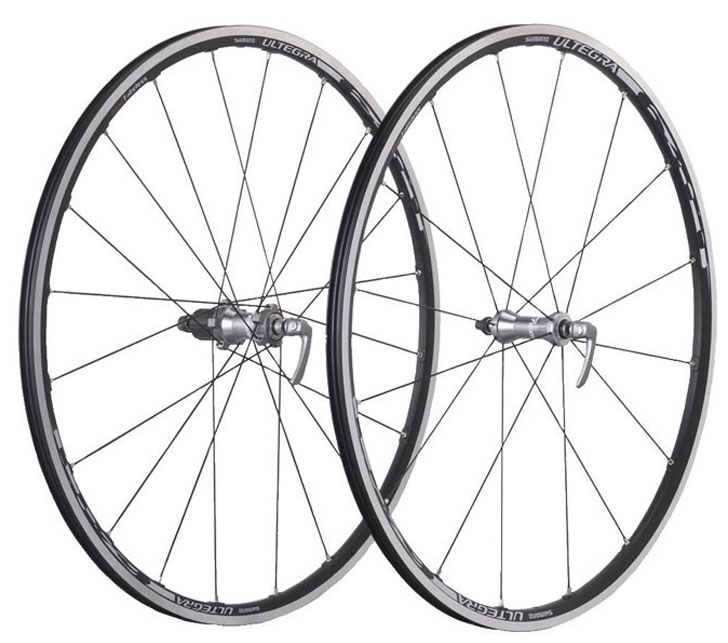
Quick definitions: Shimano's Ultegra and Dura-Ace wheels use the brand's traditional cup-and-cone bearing hub, adjustable and serviceable with basic tools. SRAM's road wheel line has historically used a toroidal rim cross-section, the same design principle Zipp pioneered, since SRAM owns Zipp.
What actually differs
Why SRAM's road wheels look like small Zipps
SRAM acquired Zipp in 2007, and it shows directly in SRAM's own-branded wheels: the archived 2010 review of the SRAM S30 AL Sprint explicitly notes the wheel uses "Zipp's toroidal rim design," the same rounded aero cross-section discussed on our Zipp vs Reynolds comparison. It's a genuine technology transfer, not a coincidental similarity.
What 65 grams and $250 actually bought
The archive review of the SRAM S30 AL Race noted its only real advantage over the cheaper S30 AL Sprint was 65 grams, entirely from lighter spokes, for an extra $250. That's a useful real-world example of diminishing returns inside a single brand's own lineup, not just between competing brands, and worth remembering before paying up a tier for a small weight difference.
Lean Shimano ifyou want a hub you or a local shop can service with basic cone wrenches rather than sending it out, or you're already deep in the Shimano ecosystem and want matched pricing.
Lean SRAM ifyou want aero rim shaping at a lower price point than buying a Zipp directly, understanding you're getting a related but not identical version of that technology.
Archive-sourced vs currentThe SRAM S30 AL Sprint sold for $750 and the Race version for $1,000 in 2010, against $650 for the Shimano Ultegra WH-6700 the same year. That roughly $100-350 premium for aero rim shaping over a standard box-section alloy wheel has held up as a reasonable current-generation expectation too.