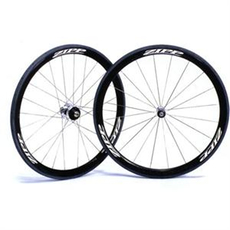
Quick definitions: A tubular tire is a fully enclosed tube-and-tire unit sewn together, then glued or taped onto a rim built without a bead hook. A clincher tire has an open bead that locks mechanically into a hooked rim wall, the way most car and consumer bicycle tires work.
What actually differs
Why the same Zipp 404 wheel is 382 grams lighter as a tubular
The archive's own numbers make this comparison concrete without needing outside sourcing: the same 404 model weighed 1276g as a tubular against 1658g as a clincher, because a clincher rim needs a hooked bead wall to physically retain the tire, extra material a tubular rim doesn't need. That weight difference is a large part of why tubular held on in professional racing long after clinchers, and now tubeless, became the consumer standard.
Why almost nobody recommends tubular for a first wheelset
The weight and ride-quality upsides are real, but the roadside repair situation is genuinely bad: a flatted tubular tire can't be patched at the roadside the way a clincher tube can, because the tire is glued to the rim. Riders who race tubular typically carry a spare tire pre-glued to a rim, not just a spare tube, which is a meaningfully bigger commitment than carrying a tube and a lever.
Tubular fits you ifyou race at a level where the weight and ride-quality edge matters, you're comfortable with the gluing process or have a shop that does it, and you carry a full spare wheel or pre-glued tire for punctures.
Stick with clincher (or tubeless) ifyou want to be able to fix a flat yourself at the roadside with common tools, or you're not racing at a level where the weight difference changes your results.